
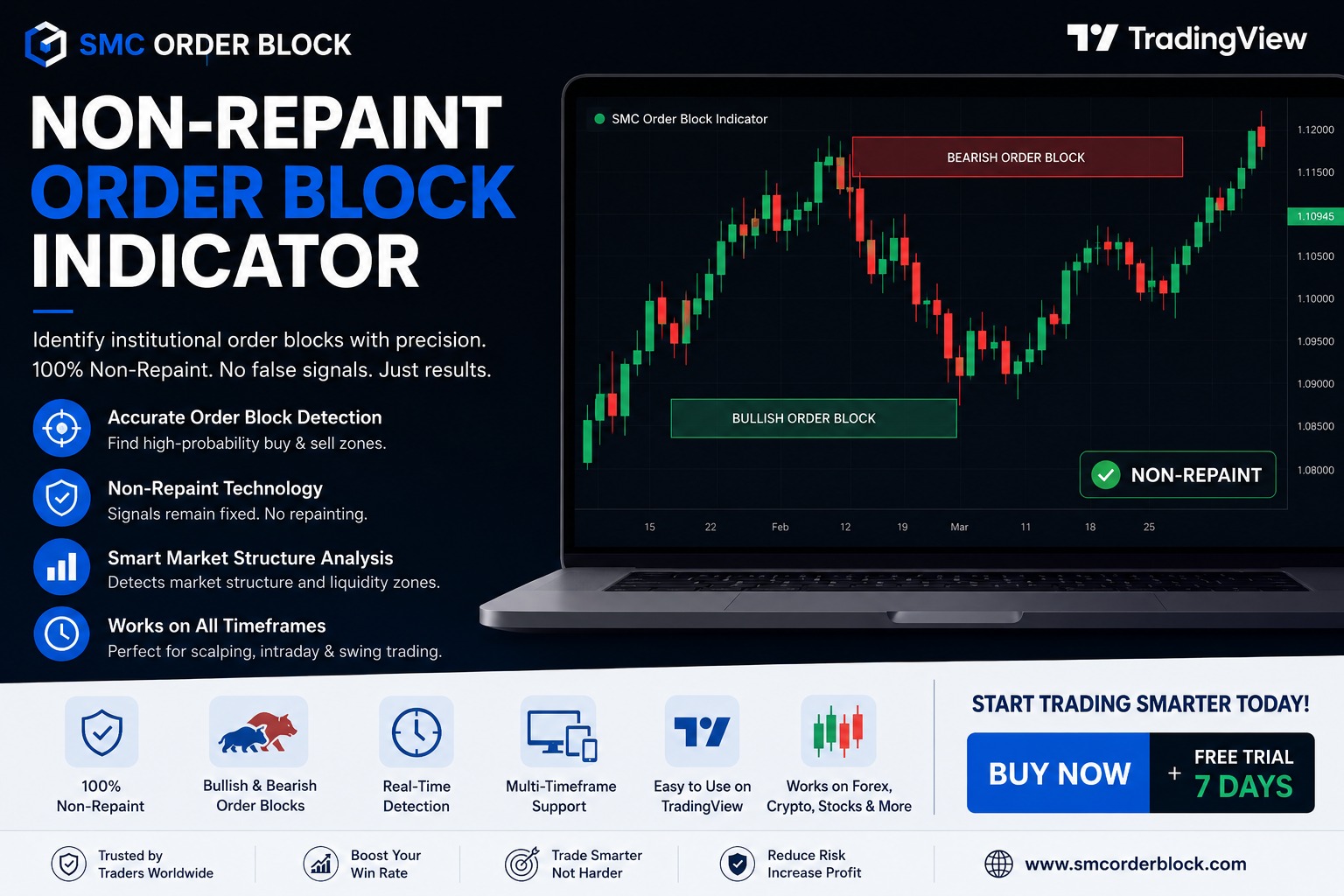
In modern trading, accuracy and consistency are everything. Many traders struggle with indicators that change signals after the candle closes, creating confusion and false confidence. This is where a non-repaint order block indicator becomes extremely valuable.
A non-repaint order block indicator helps traders identify institutional buying and selling zones without changing confirmed past signals. Once an order block is detected and confirmed by the tool logic, the zone remains fixed on the chart, giving traders more reliable market structure analysis.
What Is a Non-Repaint Order Block Indicator?
A non-repaint order block indicator is a smart trading tool designed to detect bullish and bearish order blocks in real time without modifying confirmed historical zones after a setup appears.
Unlike repainting indicators, this type of indicator does not keep changing old chart signals in a way that makes backtesting look better than real-time trading. This gives traders more confidence when analyzing charts and planning entries.
These indicators are commonly used in:
- Smart Money Concepts (SMC)
- Institutional trading strategies
- Price action trading
- Forex trading
- Crypto trading
- Stock market analysis
Why Traders Prefer Non-Repaint Indicators
Many traders lose trust in indicators because signals disappear, shift, or look different after price movement. A non-repaint order block indicator solves this problem by keeping confirmed signals stable and transparent.
Main advantages
- No fake or disappearing confirmed signals
- Clearer institutional order block detection
- Better chart review and backtesting discipline
- Cleaner market structure analysis
- Improved trade planning confidence
- Suitable for scalping, intraday, and swing trading study
How Does a Non-Repaint Order Block Indicator Work?
The indicator scans market structure and identifies areas where institutional buying or selling activity may have appeared. These areas are then marked as potential order block zones.
Step-by-step process
- Detects strong bullish or bearish candles.
- Identifies market imbalance and liquidity areas.
- Marks institutional order blocks automatically.
- Keeps confirmed zones fixed without repainting.
- Helps traders plan higher-probability entries with confirmation.
This process helps traders focus on quality setups instead of emotional trading decisions.
Key Features of Our Non-Repaint Order Block Indicator
At SMC Order Block, our tool is designed for serious traders who want professional-level market analysis on TradingView.
Who Should Use This Indicator?
This indicator is suitable for traders who want cleaner charts and more structured decision-making.
- Beginner traders
- Scalpers
- Intraday traders
- Swing traders
- Smart Money Concept traders
- TradingView users
- Market analysts who review price action zones
Whether you trade crypto, forex, stocks, commodities, or indices, a non-repaint order block indicator can help improve chart clarity and planning precision.
Final Thoughts
A reliable non-repaint order block indicator can improve a trading workflow by providing stable and trustworthy market structure zones. Instead of relying on confusing repainting indicators, traders can focus on high-probability setups with better confidence and discipline.
If you want cleaner charts, accurate order block zones, and real-time institutional analysis, this tool can become an important part of your trading system.
Start Trading Smarter Today
Accurate order block detection, non-repaint confirmed signals, all-timeframe support, and a beginner-friendly TradingView workflow.
Related Resources
- Non Repaint Order Block Indicator keyword page
- SMC Order Block Indicator guide
- TradingView Order Block Indicator page
Educational content only. SMC Order Block is a TradingView tools provider and does not provide SEBI-registered investment advice, research recommendations, or guaranteed returns. Trading involves risk.